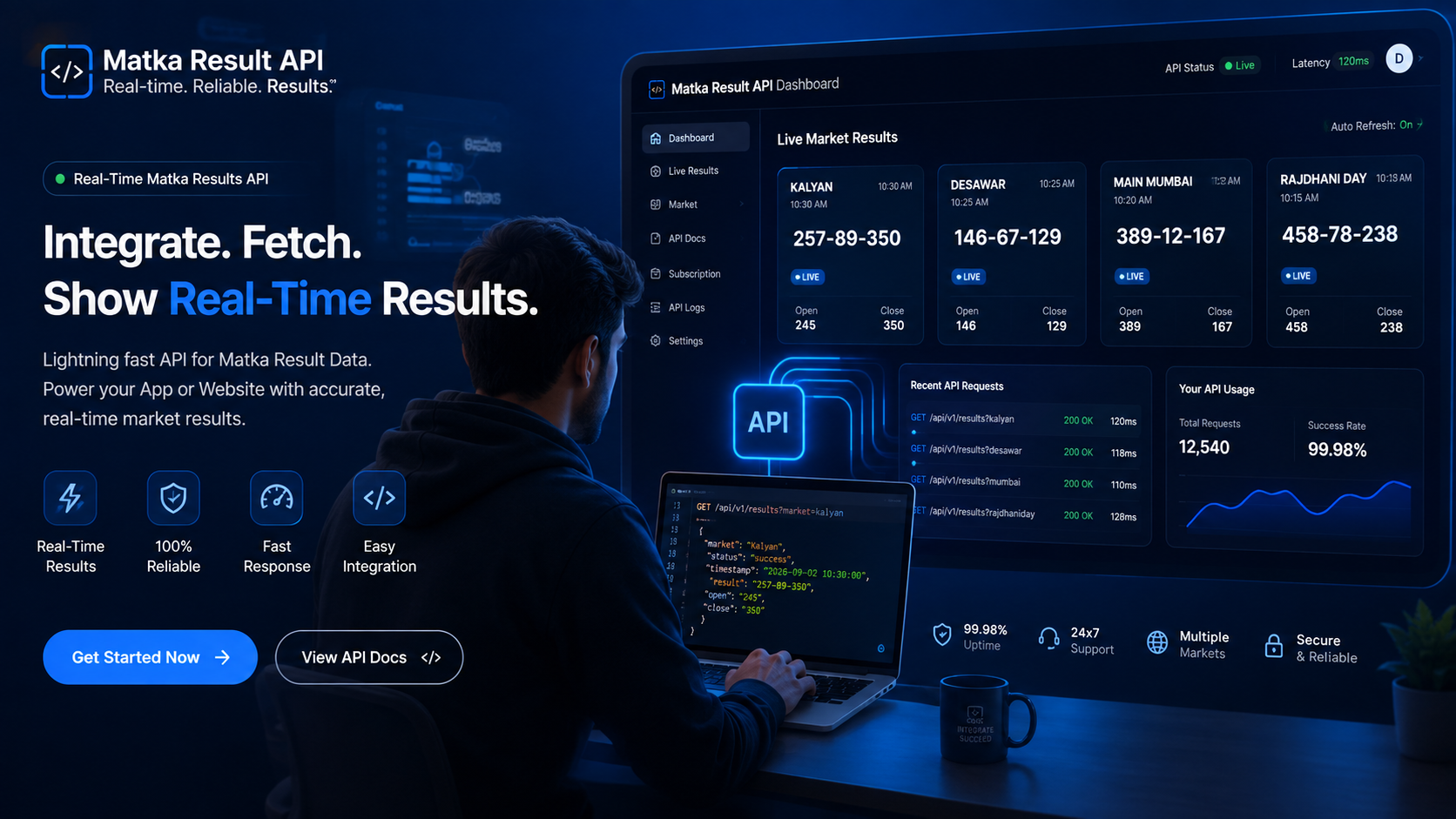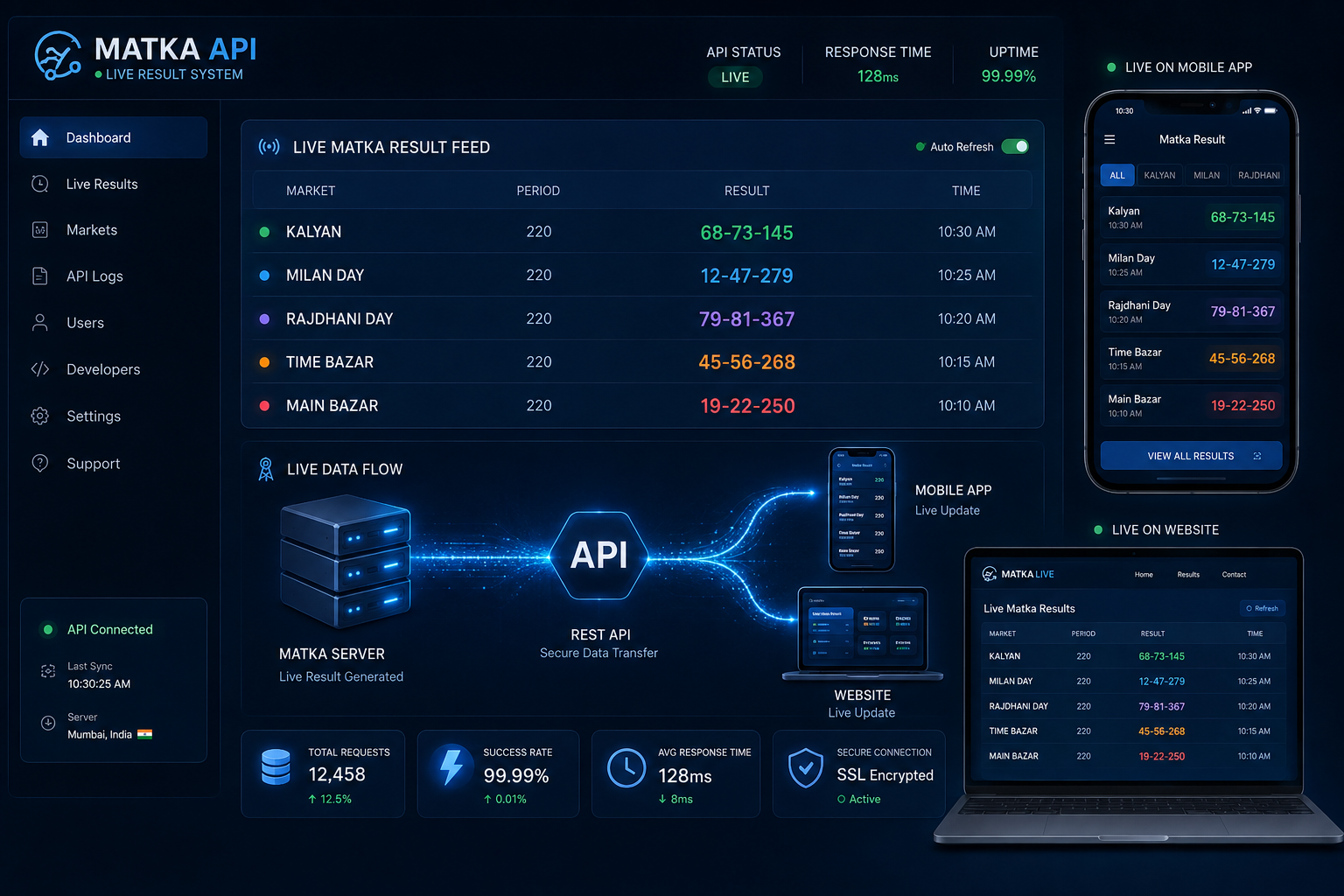
Webhook-Based Matka Result Service: Why It's Better Than API Polling
Every Matka application or result website has one common goal—display the latest result as quickly as possible.
The faster your users receive the result, the better their experience. Even a delay of a few seconds can make users refresh the page repeatedly or switch to another platform.
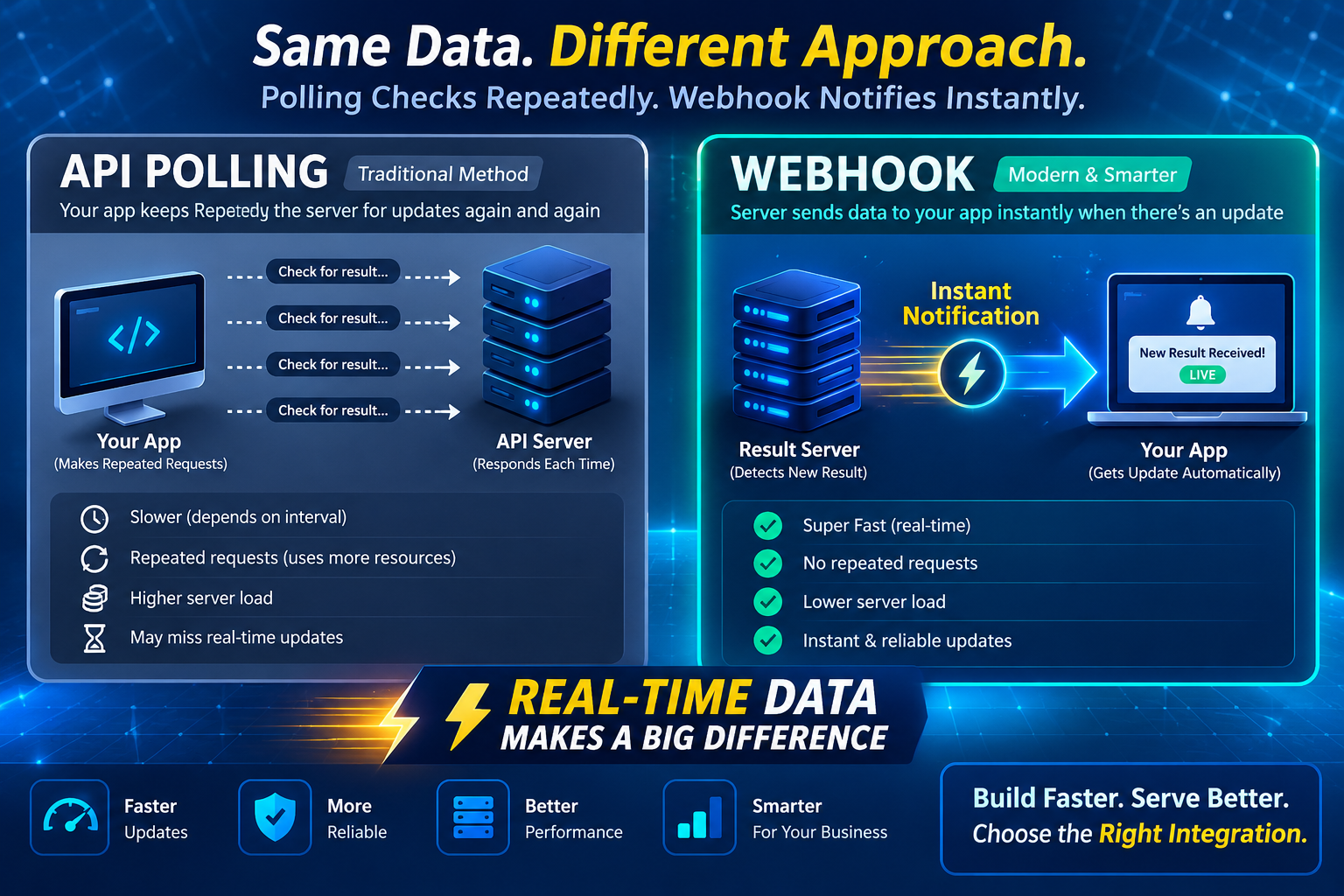
For years, many developers have relied on API polling, where the application continuously asks the server:
"Has the result arrived?"
Again...
Again...
And again...
While this method works, it's far from the most efficient solution.
Today, modern applications are moving toward Webhook-Based Result Services, which deliver results instantly without unnecessary requests.
In this article, we'll explain the difference, how webhooks work, and why they're becoming the preferred choice for serious Matka software developers.
What is API Polling?
API polling is a process where your application repeatedly sends requests to the server at regular intervals.
For example:
- Every 2 seconds
- Every 5 seconds
- Every 10 seconds
Your software keeps asking:
"Is the new result available?"
If the answer is No, it waits and asks again.
If the answer becomes Yes, it finally updates the result.
This method is simple to implement but creates several unnecessary problems over time.
Problems with API Polling
- High number of unnecessary API requests
- Increased server load
- More bandwidth consumption
- Higher infrastructure costs
- Delay depending on polling interval
- Wasted resources during inactive periods
Imagine 5,000 websites checking your API every 2 seconds.
Most of those requests return exactly the same response:
"No new result."
That's a huge amount of wasted traffic.
What is a Webhook-Based Matka Result Service?
A webhook works completely differently.
Instead of your software asking every few seconds whether a result is available, the server pushes the result automatically the moment it's published.
No repeated checking.
No waiting.
No extra API calls.
As soon as a verified result arrives, your application instantly receives it through a secure webhook endpoint.
It feels almost like receiving a notification on your phone.
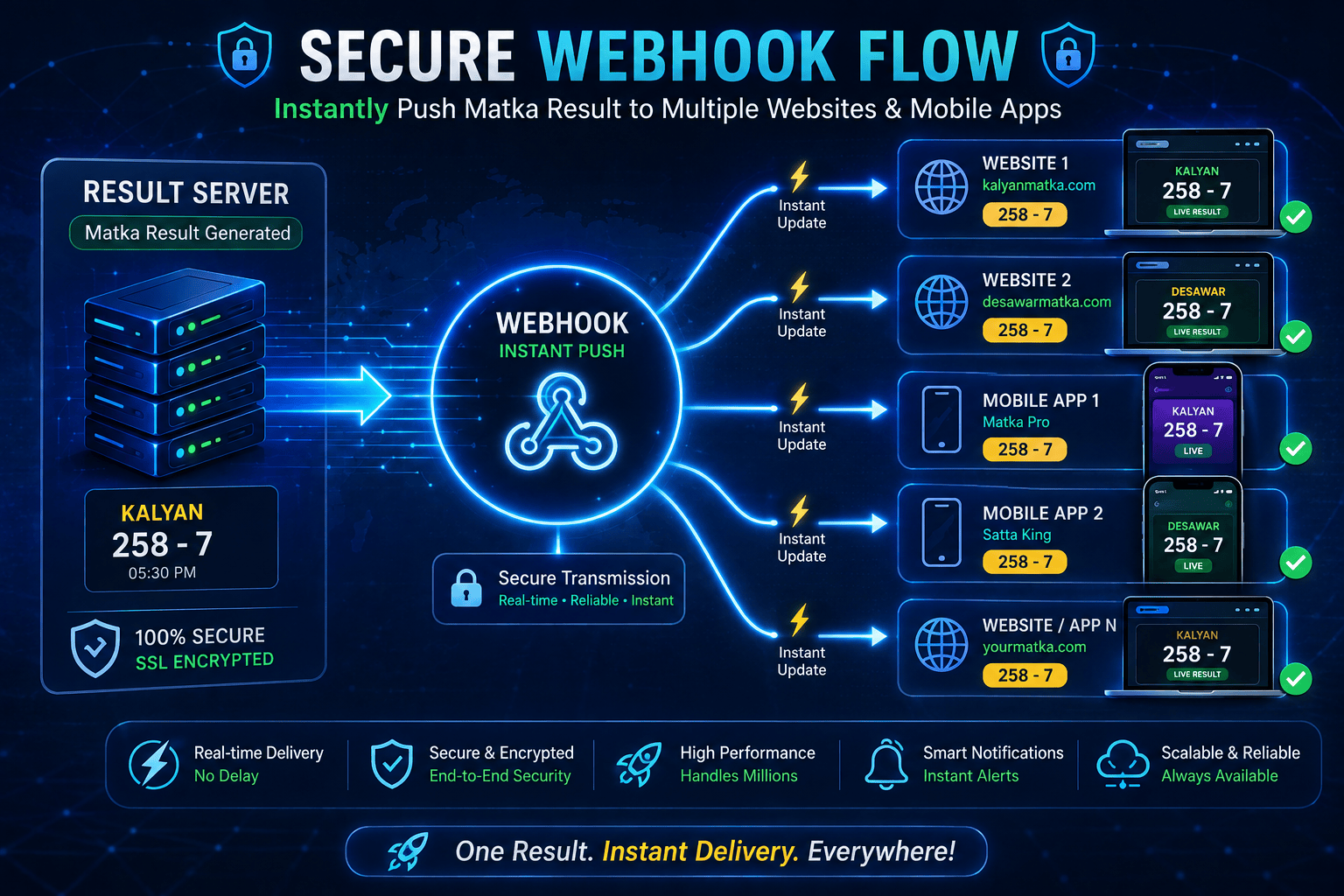
How Webhooks Work
The workflow is surprisingly simple.
Step 1
Your website provides a secure webhook URL.
Example:
https://yourwebsite.com/result-webhook
Step 2
Whenever a verified result is available, the webhook server automatically sends the result to your endpoint.
Step 3
Your application receives the data instantly.
Step 4
Users immediately see the latest result without refreshing the page multiple times.
That's it.
No continuous polling.
No unnecessary waiting.
API Polling vs Webhook
| Feature | API Polling | Webhook |
|---|---|---|
| Response Speed | Depends on polling interval | Instant |
| Server Requests | Very High | Very Low |
| Bandwidth Usage | Higher | Lower |
| Infrastructure Cost | Higher | Lower |
| User Experience | Can have delay | Real-Time |
| Scalability | Moderate | Excellent |
Why Developers Prefer Webhooks
Modern software is all about efficiency.
Instead of sending thousands of useless requests every hour, developers now prefer systems that communicate only when something actually changes.
Webhook technology makes this possible.
Some of the biggest advantages include:
- Instant result delivery
- Faster application updates
- Better scalability
- Reduced server costs
- Lower API usage
- Cleaner architecture
- Better performance during peak traffic
This becomes especially useful when handling multiple markets throughout the day.
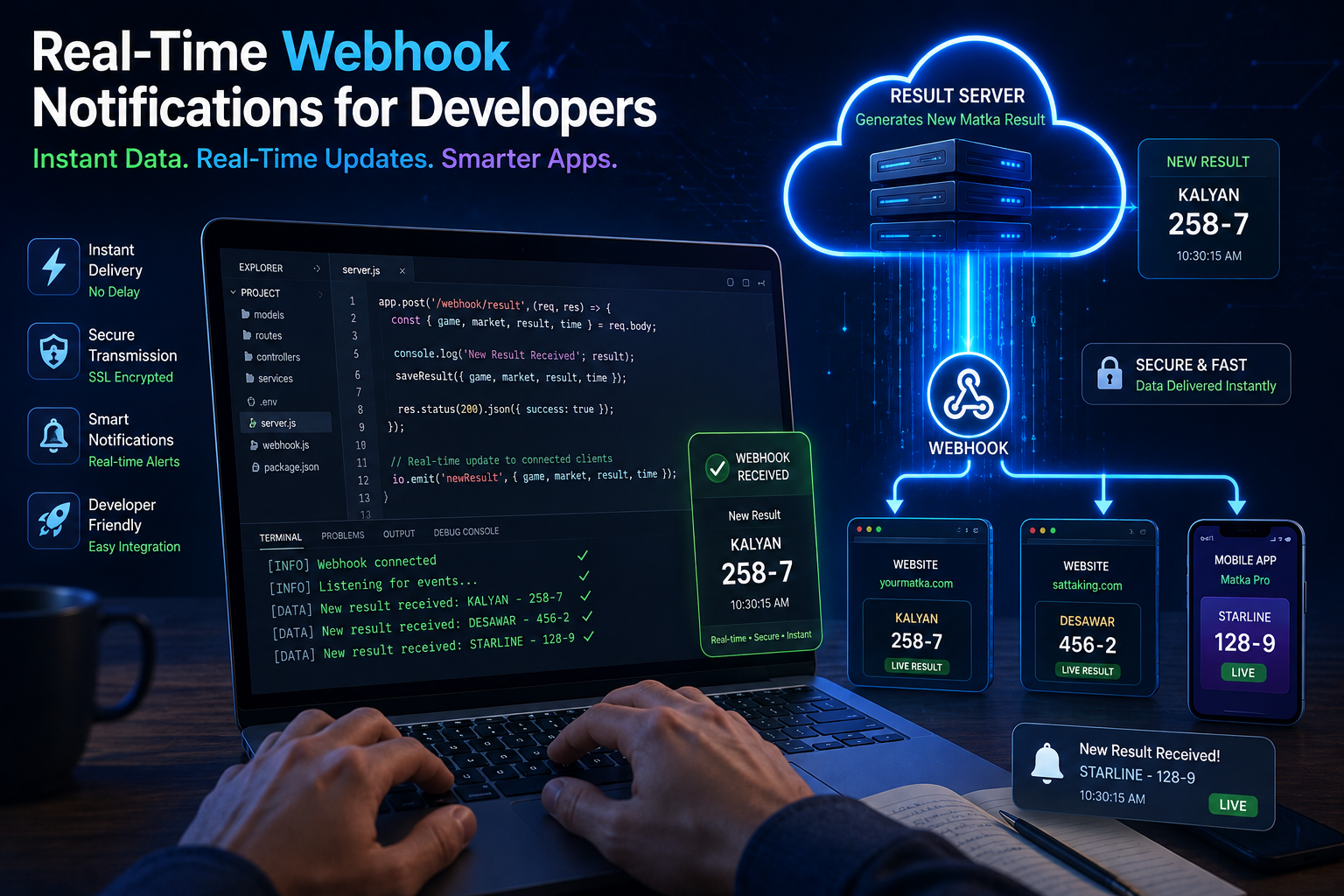
Real-Time Results Matter
When users visit a result platform, they expect updates immediately.
Nobody enjoys refreshing the page over and over.
A webhook-based system eliminates that frustration.
The moment the result becomes available, every connected application receives it almost instantly.
This creates a much smoother user experience and helps websites remain competitive.
Verified & Authentic Result Delivery
Speed is important.
Accuracy is even more important.
A professional result service should focus on delivering verified and authentic data from trusted market sources before broadcasting it through webhooks.
Reliable data reduces confusion and helps maintain consistency across connected applications.
Multiple Market Coverage
A modern result infrastructure should support all major Matka and Satta markets from a single integration.
Popular markets often include:
- Kalyan
- Milan
- Sridevi
- Time Bazar
- Madhur
- Main Bazar
- Gali
- Faridabad
- Ghaziabad
- Desawar
Instead of integrating multiple systems separately, developers can manage updates through one centralized service.
Easy Integration
One reason developers are switching to webhook services is how simple the integration can be.
In most cases, the setup involves:
- Creating a webhook endpoint
- Verifying incoming requests
- Parsing JSON data
- Updating the database
- Displaying the latest result
Once configured, the entire process becomes automatic.
Even if you're not an advanced backend developer, the documentation is usually straightforward and easy to follow.
High Uptime Means Better Reliability
Real-time systems should remain available whenever results are published.
A high-uptime infrastructure ensures your application continues receiving updates without interruption.
Reliable infrastructure also helps reduce failed requests and unexpected downtime.

Secure Data Handling
Security should never be ignored.
A good webhook system generally includes features like:
- HTTPS encryption
- Signature verification
- Secure authentication
- Request validation
- Access control
These practices help protect both the server and connected applications.
API + Webhook Together: The Best Combination
Many professional developers don't completely replace APIs.
Instead, they use both technologies together.
The webhook provides instant notifications.
The API remains available for:
- Historical data
- Manual verification
- Backup requests
- Analytics
- Re-sync operations
This combination offers flexibility while keeping performance high.
Who Should Use Webhook-Based Result Services?
Webhook delivery is ideal for:
- Matka applications
- Result websites
- Mobile apps
- Admin panels
- Affiliate platforms
- Live dashboard software
White-label gaming solutions
If your software depends on fast result updates, webhook integration can significantly improve the overall experience.
Why Many Developers Are Moving Away from Polling
As software grows, polling becomes less efficient.
Thousands of repeated requests consume server resources without adding value.
Webhook technology solves this by sending information only when it's actually needed.
It's faster, cleaner, and much more scalable for modern applications.
Even small improvements in response time can make a noticeable difference in user satisfaction.
Final Thoughts
API polling has served developers well for many years, but today's applications demand faster and more efficient communication.
Webhook-based result delivery minimizes unnecessary requests, reduces server load, and provides near real-time updates as soon as verified results become available.
For developers building modern Matka result websites or mobile applications, combining a reliable API with webhook notifications creates a more scalable and responsive infrastructure.
As technology continues to evolve, webhook-based architecture is becoming the preferred approach for applications that require speed, reliability, and efficient resource management.
Frequently Asked Questions (FAQs)
What is the difference between API polling and webhooks?
API polling repeatedly checks the server for updates, while webhooks automatically send data when a new result becomes available.
Are webhooks faster than API polling?
Yes. Webhooks generally deliver updates almost instantly because they push data automatically instead of waiting for scheduled API requests.
Can I use both API and webhook together?
Absolutely. Many developers use webhooks for instant notifications and APIs for historical records, verification, and backup retrieval.
Is webhook integration difficult?
Not really. Most integrations only require creating a secure endpoint and handling incoming JSON data. With proper documentation, setup is usually quick.
Why do real-time result updates matter?
Real-time updates improve user experience, reduce page refreshes, and ensure users receive the latest information without unnecessary delays.