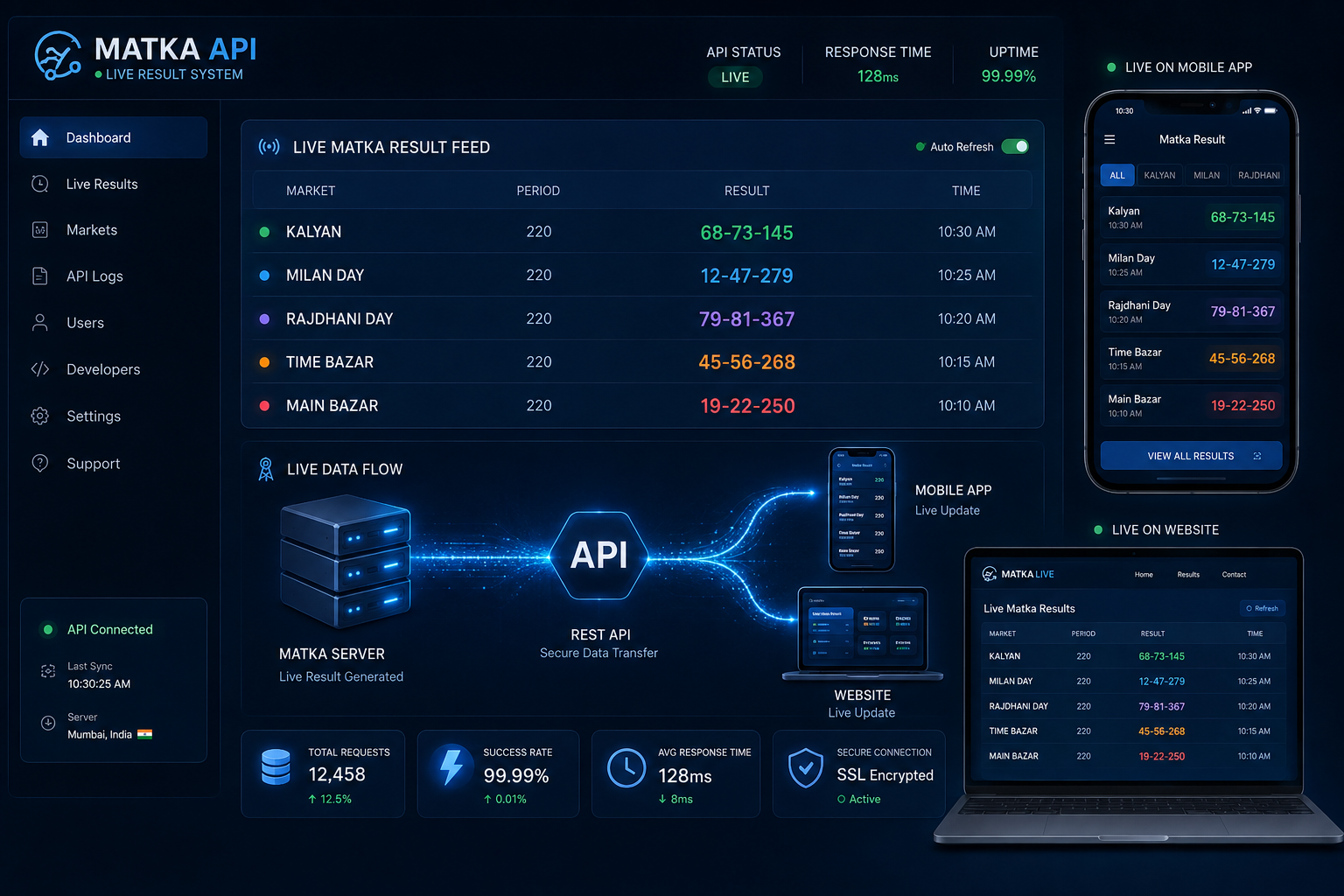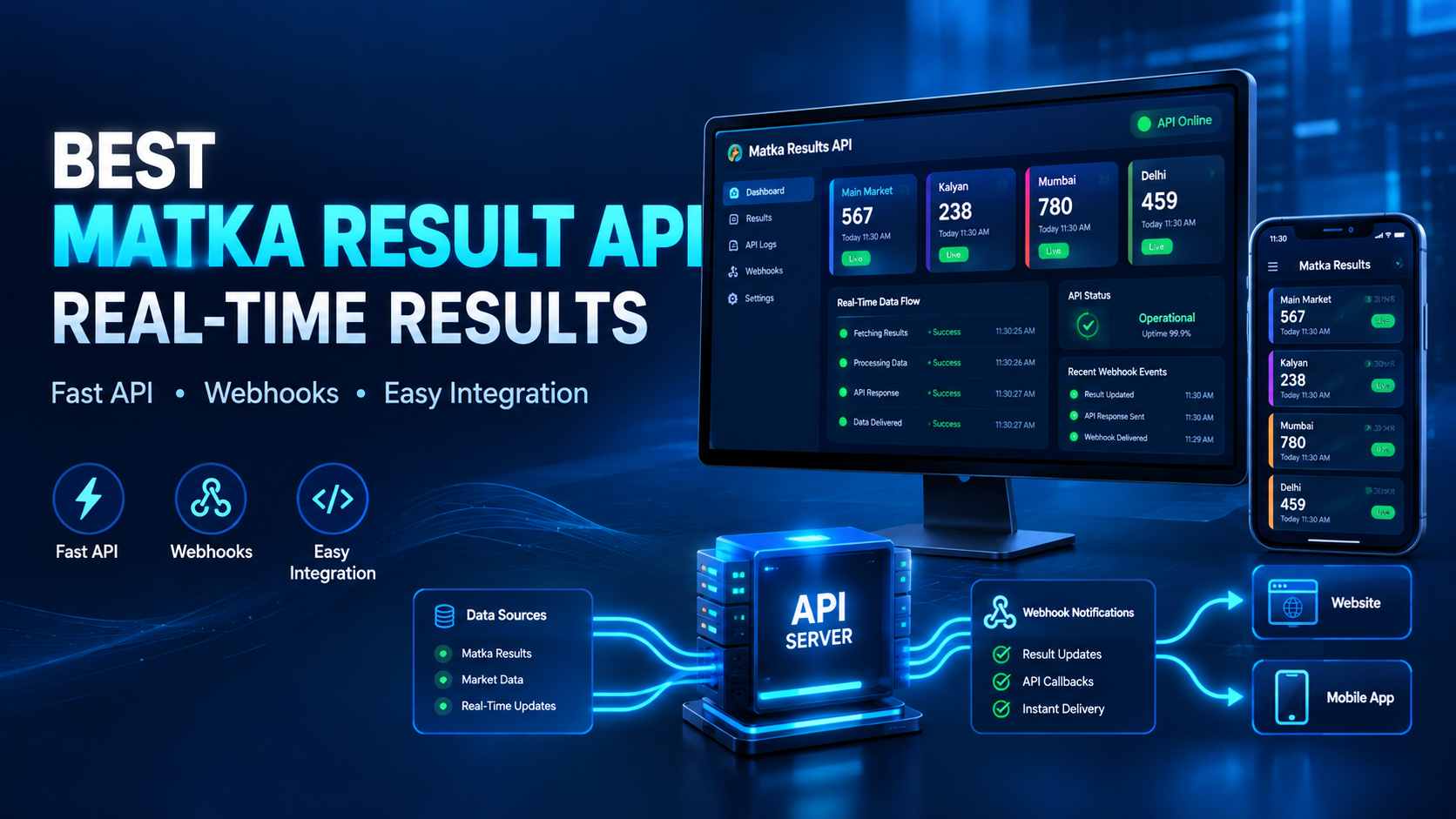
Best Matka Result API Provider for Real-Time Results
In any result-based platform, speed and accuracy of data are very important. When users are checking a market result, even a small delay can create a poor experience. This is why businesses developing Matka or Satta-related websites and applications often look for a reliable Matka Result API that can deliver results quickly and consistently.
A good result API should do more than simply return a result. It should offer reliable API access, simple documentation, secure data handling, webhook support, good uptime and technical assistance during integration.
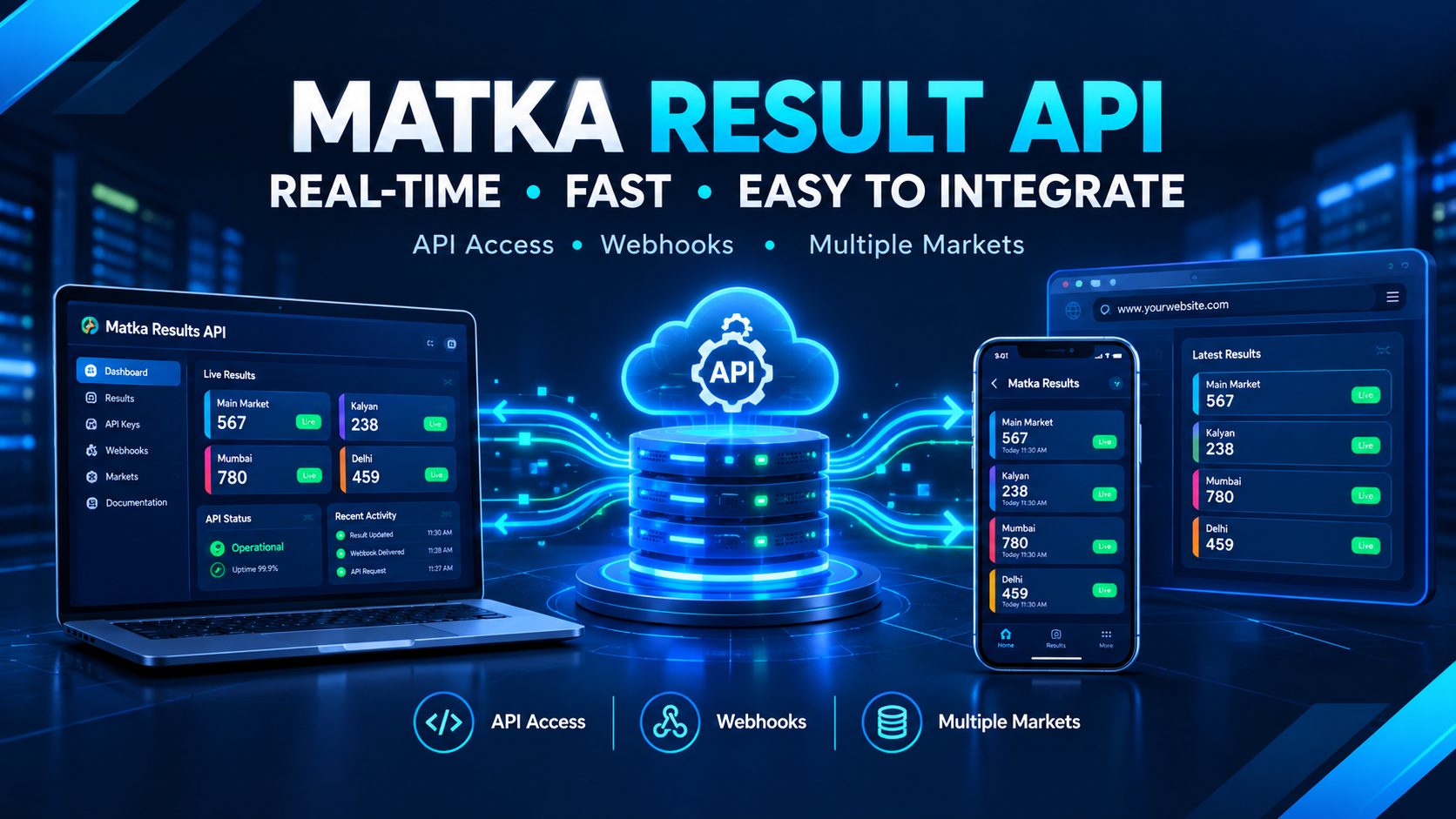
Matka Result API is designed for developers and businesses that need to display real-time market result data on their websites, mobile applications or other software systems.
Instead of manually updating results, developers can connect an API with their platform and automate the process.
What Is a Matka Result API?
A Matka Result API is an application programming interface that allows software applications to receive result data from an external API server.
For example, a website or Android application may need to display market results without requiring an administrator to manually update every result. With API integration, the software can request or receive the required data automatically.
The basic flow can look like this:
Result Source → API System → Website / App → User
This automation can save development time and reduce the need for repetitive manual updates.
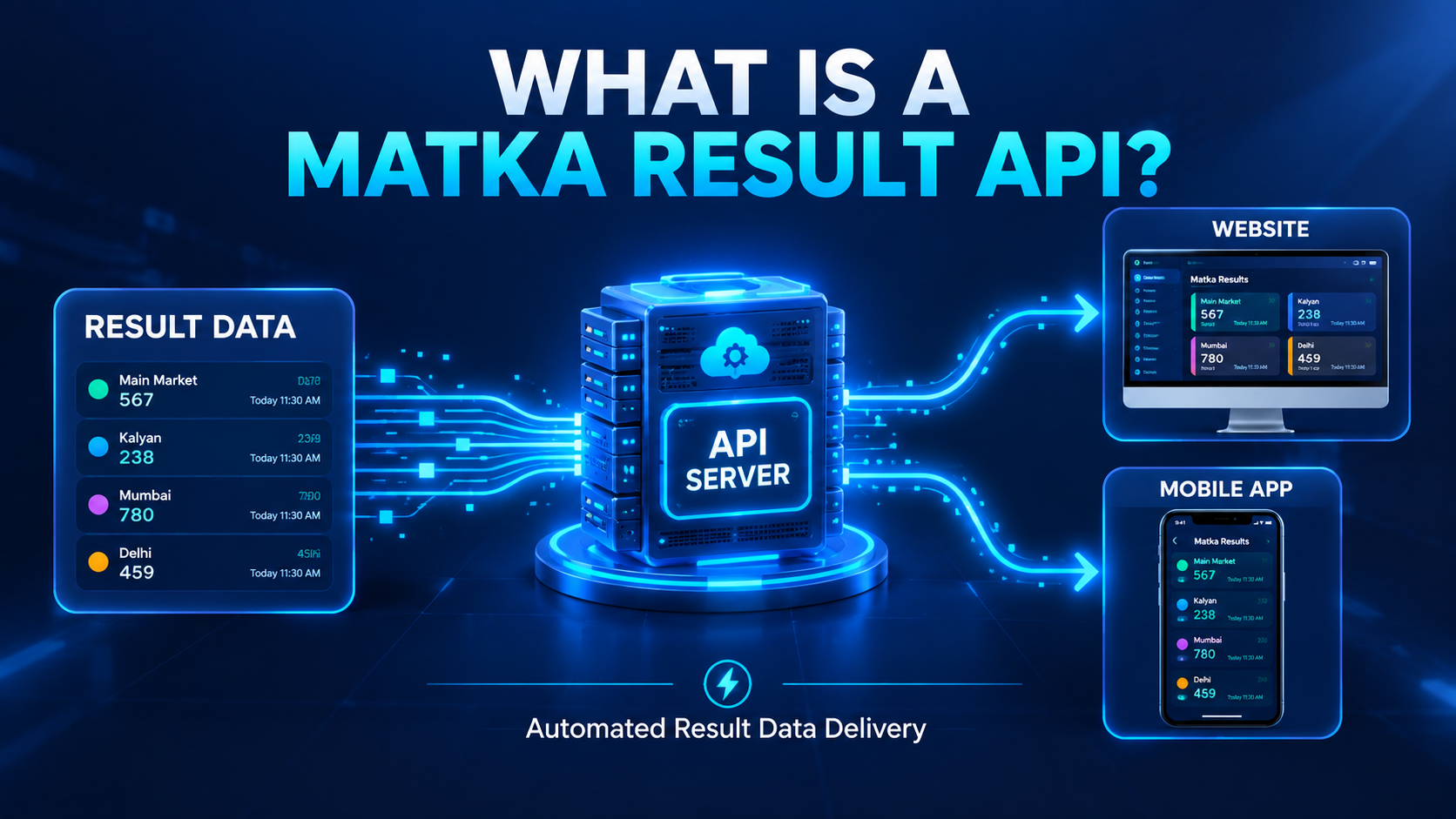
For developers, another important advantage is that the same API infrastructure can be connected with different platforms, depending on their technical requirements.
Why Real-Time Results Matter
Imagine a user opening an application and waiting for the latest result to appear. If the information is delayed, outdated or unavailable, the overall experience becomes frustrating.
This is where real-time data delivery becomes important.
A reliable API infrastructure can help applications receive updated information quickly after it becomes available from the configured data sources.
Some of the key benefits include:
- Faster result updates
- Automated data delivery
- Less manual updating
- Better application performance
- Consistent data structure
- Easier integration with websites and apps
- Reduced development workload
The exact delivery speed can depend on the source, network conditions, API architecture and other technical factors, so developers should always evaluate performance in their own environment.
Key Features of a Modern Matka Result API
When choosing a Matka Result API provider, developers usually look at more than just the number of markets available.
Here are some of the important features to consider.
1. Real-Time API Access
A good API should provide developers with structured access to the available result data.
Instead of manually collecting and entering information, the application can communicate with the API and process the response automatically.
This is particularly useful for websites and mobile applications where result information needs to be updated regularly.
2. Webhook Support
One useful feature for developers is webhook support.
With a traditional API setup, an application may repeatedly send requests to check whether new information is available.
With a webhook-based system, the server can send a notification to the connected application when an update is available.
This can help reduce unnecessary API requests and create a more efficient data flow.
For example:
New Result Available → Webhook Triggered → Your Server Receives Data → Website/App Updates
This approach can be especially useful for applications that require frequent updates.
3. Easy API Documentation
API integration should not become a complicated process.
Clear documentation can make it easier for developers to understand:
- Authentication
- API endpoints
- Request parameters
- Response formats
- Error codes
- Webhook configuration
- Integration examples
Well-written documentation can significantly reduce the time required to connect an API with an existing application.
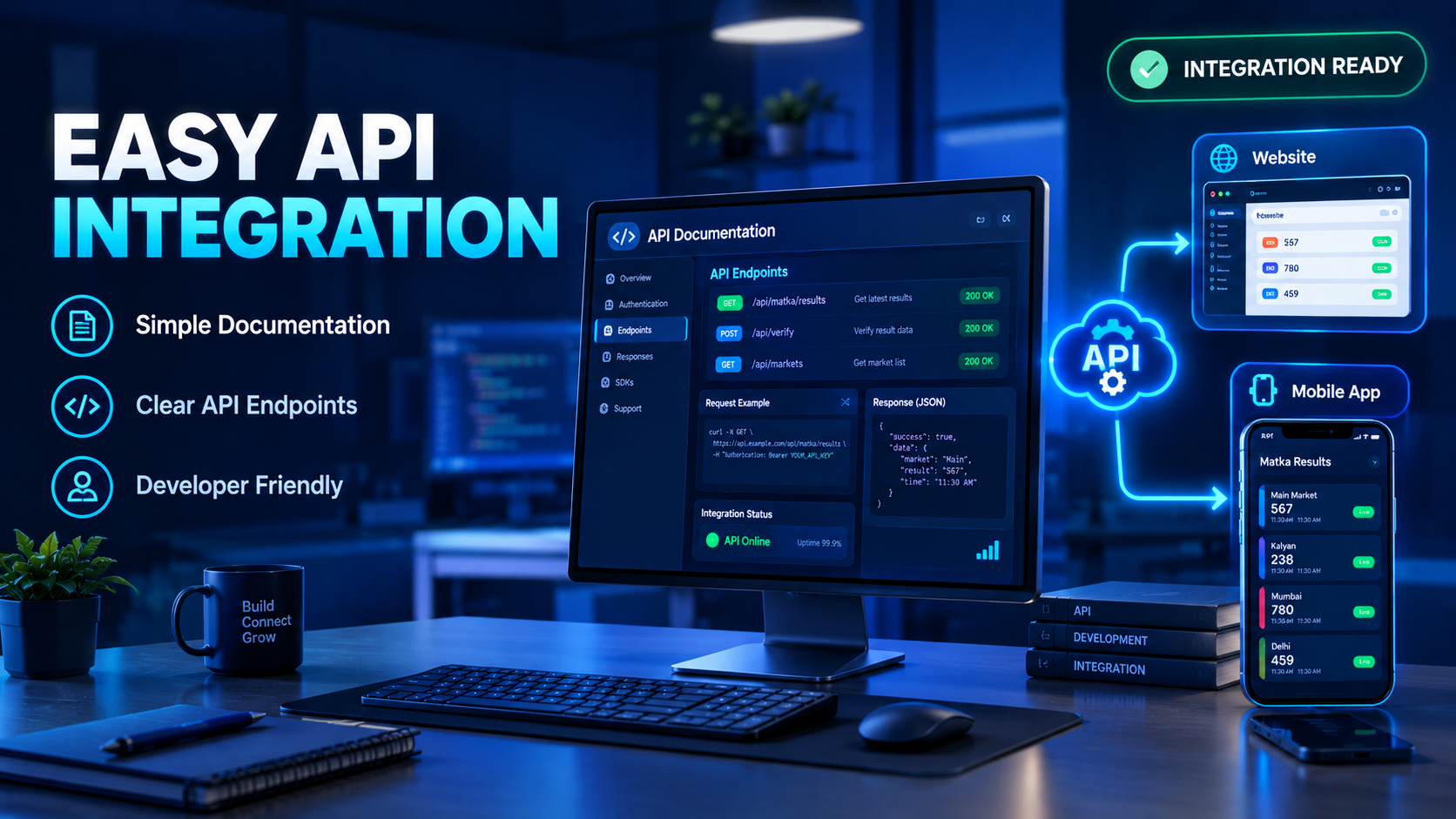
4. Easy Integration
A good Satta and Matka API should be designed with developers in mind.
Depending on the API architecture, developers may be able to integrate it with:
- PHP websites
- Laravel applications
- Node.js applications
- Android applications
- iOS applications
- Custom web applications
- Other backend systems
The exact integration method depends on the technology stack being used by the developer.
5. Secure Data Handling
Security is another important consideration when selecting an API provider.
API credentials, requests and responses should be handled securely. Developers should also follow appropriate authentication and server-side security practices when connecting their applications.
A professional API infrastructure should have suitable controls for API access and data management.
Markets Available Through Matka Result API
Different applications may require different market data. A useful API service can provide access to multiple markets through a consistent API structure.
Depending on the available data sources, supported markets may include popular names such as:
- Kalyan
- Milan
- Sridevi
- Time Bazar
- Madhur
- Main Bazar
- Gali
- Faridabad
- Ghaziabad
- Other Delhi-region markets
Market availability can change, so developers should confirm the current list of supported markets and data sources before integration.
Having multiple markets available through one API can simplify development because the application does not need completely separate data systems for every market.
Matka and Satta API for Websites and Applications
Today, developers may need to display result information across multiple platforms.
A single backend API can potentially be connected with:
Websites
Developers can integrate API responses into custom websites and automatically display the available result information.
Android Applications
Android developers can connect the backend API with their application so that the app can process and display the required data.
Custom Software
Businesses with their own software infrastructure can integrate the API into their existing backend system.
Web Applications
Modern web applications can consume API data and dynamically update their user interface.
This makes an API-based architecture more flexible than maintaining completely separate manual result systems.
Why Choose a Dedicated Matka Result API Provider?
Building and maintaining a complete result-data infrastructure internally can require considerable development and maintenance work.
A dedicated API provider can offer an already-developed infrastructure that developers can connect to their own applications.
Some factors businesses generally consider include:
Fast data delivery
Applications need timely access to available updates.
Multiple markets
A wider market selection can reduce the need for multiple integrations.
Simple integration
Clear documentation and standard API responses make development easier.
Webhook availability
Push-based updates can reduce repetitive polling requests.
Technical support
Developers may need assistance while configuring authentication, endpoints or webhook callbacks.
Uptime and reliability
Consistent availability is important for applications that depend on external API data.
Flexible pricing
Different projects have different API usage requirements, so pricing plans should match the expected volume and features.
How the Integration Process Works
The basic integration process is generally straightforward.
Step 1: Get API Access
The developer receives API credentials and the required documentation from the provider.
Step 2: Understand the API Structure
The development team reviews available endpoints, parameters, authentication methods and response formats.
Step 3: Connect the Backend
The API is connected with the application's backend using the required programming language or framework.
Step 4: Configure Result Processing
The application processes the API response and maps the available data to the required website or application interface.
Step 5: Configure Webhooks
If webhook support is available, the developer can configure a callback URL to receive updates automatically.
Step 6: Test Everything
Before going live, developers should test API requests, response handling, error cases, authentication and webhook delivery.
A proper testing process helps identify integration problems before users start accessing the system.
API Polling vs Webhook-Based Result Updates
There are two common ways applications can receive updates.
API Polling
The application repeatedly asks the API:
“Is there a new result?”
For example, a server might make requests every few seconds or minutes.
The disadvantage is that many requests may be unnecessary when there is no new information.
Webhooks
With webhooks, the API provider can notify the application's server when new data is available.
The flow becomes:
Update Available → Webhook → Your Server → Application
This can create a cleaner and more efficient architecture when implemented correctly.
For applications that require frequent updates, webhook support can therefore be an important feature to look for when selecting a Matka Result API provider.
Data Sources and Result Verification
Result data quality is one of the most important considerations when selecting an API.
An API provider may use multiple sources to collect and process available result information. These sources can include established result providers and other configured data sources.
Some providers may also use sources such as DP Boss and other market-data sources.
However, developers should always understand how a provider collects, validates and distributes data before relying on it for their application.
A professional result API should have a clearly defined data flow and should communicate any limitations or dependencies associated with its sources.
Fast and Reliable API Infrastructure
A result application needs more than a basic API endpoint.
The underlying infrastructure can include:
- API servers
- Database systems
- Caching
- Monitoring
- Authentication
- Webhook services
- Error handling
- Load management
- Backup systems
These components work together to make API access more stable.
High uptime is particularly important because an unavailable API can affect every application connected to it.
For this reason, developers should evaluate uptime, response time and support quality instead of selecting a provider based only on price.
Affordable Matka Result API Plans
Pricing is another factor when selecting an API provider.
Different websites and applications may have completely different API usage requirements. A small project may need limited requests, while a larger application may require higher request limits and additional features.
An API provider can offer different pricing plans based on factors such as:
- API request limits
- Number of markets
- Webhook access
- Support requirements
- Data availability
- Project size
- Integration requirements
Before purchasing a plan, developers should understand exactly what is included and whether the plan fits their expected usage.
Affordable pricing becomes more useful when it is combined with reliable infrastructure and proper technical support.
Technical Support for API Integration
Even with good documentation, developers can sometimes face technical issues during integration.
For example:
- Authentication errors
- Incorrect parameters
- Response parsing problems
- Webhook configuration
- Server-side issues
- Incorrect callback URLs
- Unexpected API responses
Technical support can make the integration process much easier.
A provider that understands development requirements can help developers troubleshoot these issues and get their applications connected properly.
What Should You Check Before Choosing a Matka Result API Provider?
Before selecting a provider, consider the following checklist:
✔ API Documentation
Is the documentation clear and updated?
✔ Response Speed
How quickly does the API respond under normal conditions?
✔ Data Availability
Does the provider support the markets required by your application?
✔ Webhooks
Can your application receive updates through webhook notifications?
✔ Security
What authentication and API security mechanisms are available?
✔ Uptime
Does the provider monitor and maintain API availability?
✔ Technical Support
Is integration assistance available when required?
✔ Pricing
Does the pricing model match your expected API usage?
✔ Scalability
Can the infrastructure support your project as its traffic grows?
Looking at these points can help developers make a more informed technical decision.
Why Developers Use APIs Instead of Manual Result Updates
Manual result management can become difficult as the number of markets and updates increases.
A manual workflow may look like:
Collect Result → Login to Admin → Enter Result → Save → Check Website → Update Users
An API-based workflow can automate much of this process:
Result Source → API → Application → User
Automation can reduce repetitive administrative work and allow development teams to focus on the actual application rather than continuously maintaining result entries.
Matka Result API for Modern Applications
Modern software applications increasingly depend on APIs to connect different systems.
Instead of storing every piece of external information manually, an application can retrieve data from specialized services when required.
A Matka Result API follows this same technical concept by providing structured result information that can be consumed by websites, applications and other software systems.
With features such as API access, webhook notifications, multiple market support, documentation and technical assistance, developers can build a more automated data-delivery workflow.
Final Thoughts
Choosing a Matka Result API provider should not be based only on the number of markets or the lowest price.
Developers should consider the complete technical setup, including API speed, data availability, uptime, security, documentation, webhook support, integration process and technical assistance.
For businesses building websites or applications that require real-time result data, an API-based infrastructure can reduce manual work and make result updates easier to manage.
Matka Result API provides an API-focused approach for applications that need access to available Matka and Satta market result data, with features such as easy integration, webhook-based updates, multiple market support and technical assistance.
Before going live, always test the API with your own application and verify that the available data, markets, response format, pricing and usage limits match your project's requirements.
Frequently Asked Questions
What is a Matka Result API?
A Matka Result API is an API service that allows websites, mobile applications and software systems to receive available Matka result data programmatically instead of manually entering results.
Why use a Matka Result API?
An API can automate result-data delivery, reduce manual updates and make it easier for websites and applications to process available market information.
Does Matka Result API support webhooks?
Webhook support can allow a connected application to receive notifications when new data becomes available, reducing the need for repeated API polling.
Which markets can be available through a Matka Result API?
Depending on the provider and its data sources, markets may include Kalyan, Milan, Sridevi, Time Bazar, Madhur, Main Bazar, Gali, Faridabad, Ghaziabad and other markets.
Is Matka Result API easy to integrate?
A properly documented API can be integrated with websites, Android applications, web applications and custom software. The exact integration process depends on the technology stack being used.
Does the API provide real-time results?
API providers can offer frequent or near-real-time updates depending on their data sources and infrastructure. Developers should verify the provider's actual update frequency and response performance before implementation.
Can developers get integration support?
Technical support may be available for API configuration, authentication, endpoint usage and webhook setup. Developers should confirm the support included with their selected plan.